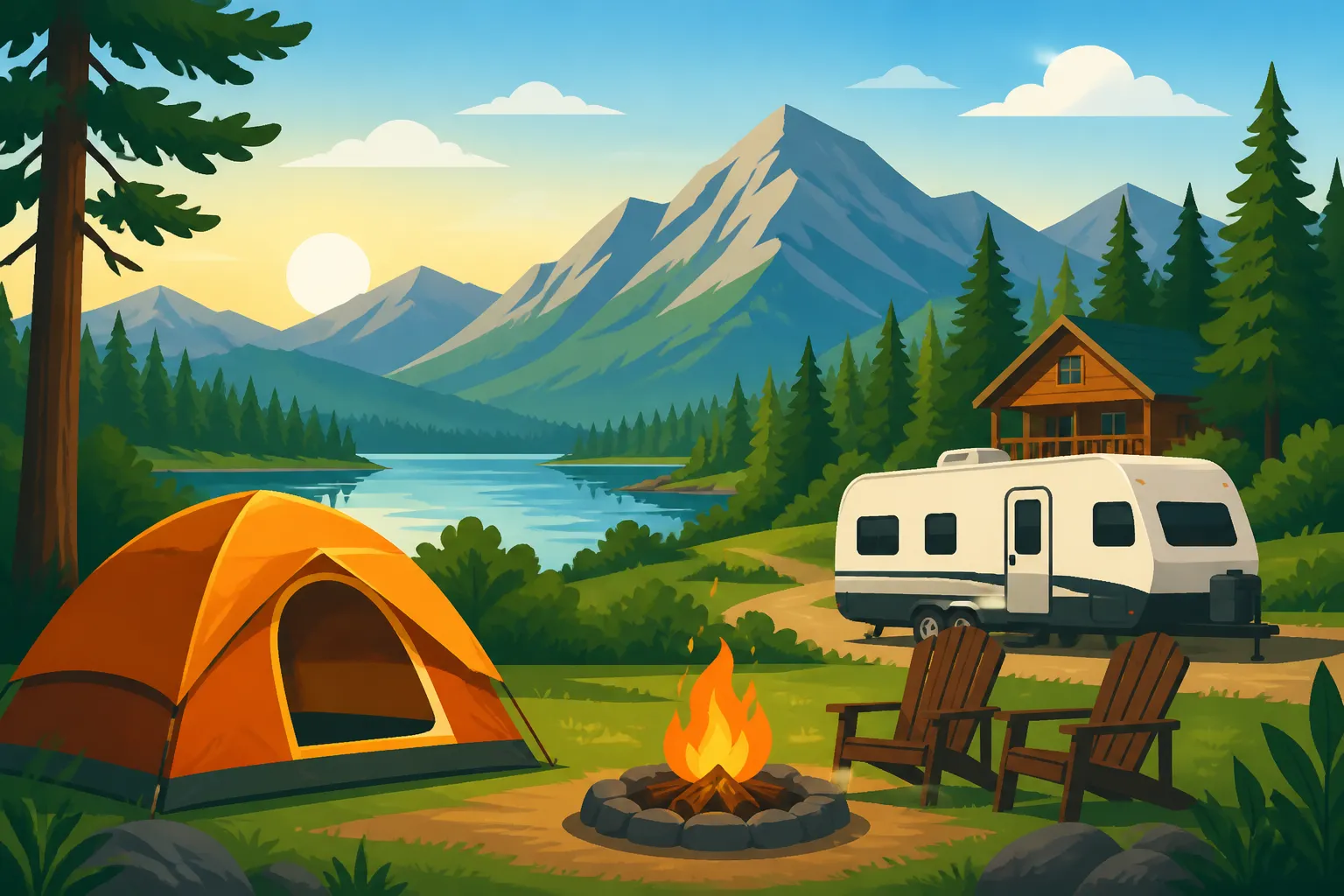
Camping in New Hampshire State Parks, From Tent Sites to Cabins
New Hampshire state park camping can mean very different things: a tent on a primitive site, a roof over your head in a cabin or yurt, or an RV setup with hookups. The challenge is choosing a stay that fits your equipment and comfort needs, then checking what the specific campground offers. This guide lays out the options and a practical way to plan.
What camping in New Hampshire State Parks offers
State park camping is not one standard setup repeated at every campground. New Hampshire Department of Natural and Cultural Resources describes the system as having 23 State Park Campgrounds. The New Hampshire Department of Natural and Cultural Resources says New Hampshire State Parks offer primitive camping, cabin and yurt rentals, full-service RV hookups, and lean-to’s. That range makes it possible to plan around different equipment, group needs and preferences rather than assuming every trip requires a tent or a full-service site.
The New Hampshire Department of Natural and Cultural Resources says NH State Parks campgrounds are in every region of the state. For campers, that means you can start with the area you want to visit, then look for a campground and accommodation that suit the trip. If a destination is the priority, your choice of camping style may depend on what that particular campground lists. If the type of stay matters most, you can look for locations that offer it and decide which setting works for you.
A state park campsite can be a practical base for spending time outdoors, but the exact experience depends on the site and facilities. A primitive site calls for more self-sufficiency than a full-service RV hookup. A cabin or yurt may reduce the amount of shelter gear you need to bring, but it is still important to check what the rental provides and what you are expected to pack. A lean-to offers another kind of shelter, with its own considerations for sleeping arrangements and gear.
Before choosing, separate the trip into a few decisions:
- Where do you want to camp? Begin with a region, park or nearby activity that matters to your group.
- What kind of shelter suits your equipment? Consider a tent, RV, cabin, yurt or lean-to.
- What facilities do you need? Check the specific campground listing rather than assuming every location has the same amenities.
- How much planning do you want to do? A site that requires more equipment and self-reliance may take more preparation than a rental.
- What is your backup plan? The accommodation you prefer may not be open or available for the dates you want.
The broad choice of camping types is useful, but it does not mean every option is offered at every park. A sensible plan begins with the specific campground listing and treats the system-wide range as a menu, not a promise about any one location. For a first comparison of shelters, see Choosing Between a Campsite, Cabin, Yurt or Lean-To in NH State Parks.
Choose a camping style that fits your trip
A good booking is not simply the site that looks appealing in a search result. It is the option that matches the people, equipment and level of comfort you are bringing. A tent camper with a compact setup may be happy with a basic site, while a group relying on an RV or a roofed rental needs to confirm the available facilities and sleeping arrangement before committing.
| Camping option | A good fit when | Questions to answer before booking |
|---|---|---|
| Primitive site | You have the shelter and equipment to manage a more basic stay | What does the listing say about access, facilities and what to bring? |
| Standard tent site | You want a designated place to pitch a tent | Is the site suitable for your tent and sleeping setup? |
| Lean-to | You want a simple roofed shelter as part of the camping experience | What sleeping space and gear does the listing describe? |
| Cabin | You want a rental shelter rather than pitching a tent | What furnishings, utilities and supplies are included? |
| Yurt | You want a different kind of roofed rental | What does this yurt provide, and what must you bring? |
| RV site | You are traveling with a recreational vehicle | Which hookups or services are listed, and will your rig fit? |
The table is a starting point, not a substitute for checking the details. Even accommodations with the same general name can differ in equipment, access and facilities. Read the exact listing for the site or rental you are considering, especially if your trip depends on electricity, water, a particular sleeping arrangement or a certain amount of room.
Primitive and tent camping
Primitive camping generally asks you to arrive prepared to rely on your own equipment and to check carefully what the site provides. Before reserving, think through the basics: shelter, sleeping gear, lighting, food preparation, water needs and a way to keep your belongings organized. The details of the campground listing should guide what you pack; do not assume a primitive site includes the same facilities as a developed campsite.
Tent campers should measure or otherwise verify their tent setup before choosing a site. A tent that fits on one kind of site may not suit another, particularly if you use a large shelter or bring extra gear. The listing is also the place to check how the site is accessed and whether the site description fits the mobility and equipment needs of the people coming along.
For a closer look at the distinctions among site types, read Primitive, Standard or Lean-To: Comparing NH State Park Campsites. For a broader picture of what to check on a listing, see What Comes With a NH State Park Campsite, From Tables to Fire Rings.
Cabins, yurts and lean-tos
A roofed option can make a camping trip more manageable when you do not have a tent, want to carry less shelter equipment, or prefer a different overnight arrangement. But “roofed” does not tell you what else is included. A cabin, yurt and lean-to should not be treated as interchangeable: check the specific description for beds or sleeping surfaces, furnishings, utilities, access and any supplies you will need.
Make a packing list only after confirming the particulars. If the listing does not clearly answer a question that affects your trip, ask the park or use the official information channel before booking. This is especially important if someone in your group has mobility needs, if you need particular sleeping arrangements, or if your plan depends on a feature such as electricity.
A lean-to is still a camping choice, so plan for the equipment and conditions the listing describes rather than expecting a furnished rental. A cabin or yurt may call for a different packing approach, but it is still wise to verify what is provided and what is not. The practical comparison is about the full stay: shelter, equipment, sleeping comfort, services and how much you want to carry.
RV camping
An RV site can be a suitable choice when your trip depends on vehicle-based sleeping or services at the campsite. But the broad label “RV site” does not establish which hookups are provided or whether a particular rig can use the site comfortably. Check the listing for the site’s stated equipment and services, and compare its fit with your vehicle and any tow vehicle you plan to bring.
If having water, electricity or other services is essential, verify the exact hookup type before you reserve. Do not infer that every RV-capable campground offers the same connections or that a “full-service” description applies to every site. The site-level listing is what should settle the question. Water and Electric Campsites at NH State Parks, Explained and RV Hookup Sites at NH State Parks and What Each Kind Costs can help frame the details to check.
Match the campground to the group and destination
Choosing where to camp can start with the destination or with the style of stay. Neither approach is automatically better; the right one depends on what your group cares about most. If a particular area is the reason for the trip, identify campgrounds nearby and compare what each actually offers. If you already know you need an RV hookup, a cabin or a more basic tent site, begin with that requirement and see which locations fit.
The New Hampshire Department of Natural and Cultural Resources says NH State Parks campgrounds are in every region of the state. Use that statewide spread as a planning advantage: you can look for an accommodation that suits you while considering different parts of New Hampshire. It is still essential to verify the location, site type and services for the campground you choose. A system-wide description cannot confirm an individual park’s current offerings.
Start with the people coming
A site that works well for one person may be a poor fit for a larger group. Think about who is coming, how they sleep, how much equipment they bring and whether they need particular facilities. A family with young children may prioritize a straightforward setup and enough room to manage gear. Friends sharing a trip may care more about sleeping arrangements and how to organize the shared space. A camper with access needs may need specific information about the route to the site, the surface, facilities and rental layout.
These are reasons to check details, not assumptions about what a named campground provides. When a feature is important, look for it in the official listing or ask the park before booking. If the written description is not specific enough, treat that as a question to resolve rather than relying on a guess.
Choose a location with the actual trip in mind
A campground is not just an overnight address. Consider how it fits into the rest of your plans: how you will get there, what you hope to do nearby, how much time you want to spend driving, and whether your group wants a quiet base or easy access to particular activities. These are personal planning choices, so the best answer depends on the group and the trip rather than a universal ranking of parks.
Think about the whole arrival, too. If you are bringing a tent, consider how much you will need to unload and carry. If you are using an RV, confirm that the site description works for your vehicle. If you are renting a cabin or yurt, decide what you can leave at home only after checking what is provided. The smoother the arrival plan, the less likely you are to discover that a key item or assumption does not match the site.
For park-specific choices, use the campground pages and relevant park information, then compare details rather than relying on a name alone. Some readers may be deciding between a tent site and roofed accommodation; others may be choosing among RV facilities or looking for a campground that fits a particular group. The decision becomes easier when you define the must-haves first and treat convenience features as preferences.
Let your non-negotiables lead
Write down the few things that would make the stay impractical if they were missing. That might be a suitable space for your shelter, an RV service, a particular sleeping layout or an access feature. Check those requirements first. Once they are confirmed, compare less essential factors such as the feel of the setting, the amount of packing involved or the type of camping experience you want.
This approach also helps when your first choice is unavailable. Instead of searching randomly, decide which requirements can change. Maybe you can consider another region, a different accommodation type or alternate dates. If a requirement cannot change, keep it as a firm filter and look for a realistic alternative rather than booking something that will not work.
Understand reservations and availability
Planning is easier when you know that camping reservations can be made ahead, but availability and booking details still need to be checked for the dates and accommodation you want. According to the New Hampshire Department of Natural and Cultural Resources, camping reservations can be made 11 months in advance online or by phone. The agency’s official reservation information is the place to confirm current availability, details and any requirements that apply to your booking.
A booking window gives you a reason to plan early when dates or site type matter. It does not guarantee that a particular campsite will be available, nor does it mean you should make a reservation before confirming that the site suits your group. Think of reservation timing as one part of planning: first identify what you need, then compare listings, then book the option that matches those needs if it is available.
For a step-by-step overview of the process, see Campground Reservations in New Hampshire: A Practical Guide. If you want more detail about booking lead time, How Many Months Ahead Can You Reserve a NH State Park Campsite? is also relevant.
Before you book
Before submitting a reservation, make sure the details line up:
- Dates: Check that your travel dates match the booking and the campground’s current operating information.
- Accommodation: Confirm that you are selecting the intended site type or rental, not simply the park.
- Equipment: Check that your tent, RV or other setup matches the listing.
- Services: Verify any hookup or facility you consider necessary.
- Group needs: Review sleeping arrangements, access details and other features important to the people coming.
- Policies: Read the current campground terms and rules rather than relying on assumptions or a previous visit.
- Arrival details: Confirm how check-in and arrival are handled for your reservation.
- Plan B: Know what you would do if your preferred choice is unavailable or the listing does not fit.
The reservation is for a particular accommodation, not a general promise that every feature you want will be on hand. Reading the listing before booking helps avoid a mismatch between what you expect and what you have reserved. Save or note the information you will need for the trip, and recheck official details before leaving in case something relevant has changed.
If your preferred option is unavailable
A sold-out result does not always mean the trip itself is impossible. Decide which parts of your plan are flexible: dates, region, accommodation or the length of the stay. Search alternatives that still meet your non-negotiables. If you need a specific RV service or access feature, do not replace it with a listing that lacks confirmation of that feature simply to secure a booking.
If you are considering a trip without a reservation, check the current official information for how that option works and what availability to expect. Do not assume that a campground will have open space when you arrive. The article Camping in New Hampshire Without a Reservation: How First-Come Works provides a useful overview of the questions to resolve before relying on an unreserved site.
Prepare for the stay, not just the booking
Once you have chosen the campground and accommodation, build your trip plan around the actual site description. A useful packing list follows from what the campground provides and what your party needs. A list copied from someone else’s trip may include items you do not need while missing something important for your own setup.
For a tent or primitive site, check what shelter, bedding, lighting and cooking equipment you will bring. For an RV, confirm the relevant connection equipment and the vehicle details. For a cabin or yurt, verify which supplies are included and what must come with you. For a lean-to, plan for a camping setup rather than assuming the roofed structure supplies other equipment. The goal is to prepare for the specific stay, not to pack for every possible kind of camping.
Use the site listing as your checklist
Go through the listing in a deliberate order. Start with accommodation type and the site description. Then check access, facilities, services, sleeping arrangements and any stated restrictions or rules. If you are bringing a pet, a large vehicle, specialized gear or someone with particular access needs, look specifically for information that applies to that part of your plan.
When the information is unclear, ask before departure. A quick clarification can help you avoid bringing unsuitable equipment or arriving with a mistaken expectation. Use the official park or reservation information to find current contact details; do not rely on an old note, a third-party comment or a description of a different site.
That same careful approach applies to rules. State park systems may have rules about pets, fires, food storage, quiet hours and campground behavior, but the details that apply depend on the current official information. Check the relevant rules for your campground and the activities you intend to do. For a broad starting point on camping conduct, see New Hampshire State Park Camping Policies, From Booking to Checkout and Everyday Rules at NH State Park Campgrounds, From Leashes to Litter. Treat those topics as prompts to verify the rules for your stay, not as substitutes for checking current park information.
Plan around practical needs
A comfortable trip is often the result of sorting out small logistics before arrival. Consider how you will pack and unload, where essential supplies will be stored, and how your group will handle meals and bedtime. If you have children, think about what they will need to stay comfortable while adults set up or organize the site. If you arrive with an RV, make sure your setup plan matches the site and services you selected.
Food and waste are worth thinking through in advance. Check the campground’s directions on food storage and trash, and bring suitable supplies for following them. Do not assume every campground has the same disposal arrangements or that you can leave items at the site. Likewise, check the official fire information before you plan to cook over a fire or bring firewood. Conditions and instructions can change, so use current park information rather than a saved assumption from an earlier trip.
Also consider what happens if the weather changes or the group’s needs shift. Keep the accommodation details available, pack clothing and supplies appropriate to the trip, and know how to find official updates. Flexibility does not mean ignoring the plan; it means having a practical response if a facility, access route or activity is not as expected.
Make arrival simpler
Before you leave, review the reservation details and directions, confirm which accommodation you booked, and check the park’s current information. If you are arriving with equipment that has size or setup requirements, double-check that your booking matches it. If you have an important question unresolved, settle it through the official information channel while there is still time to adjust your plan.
Once you arrive, follow posted signs and park instructions. If something does not match what you understood from the listing, pause and ask park staff for clarification instead of improvising in a way that could affect safety, access or other visitors. A little preparation leaves more time for the reason you came: enjoying the trip.
Make a realistic choice when comparing options
Comparisons are most useful when they distinguish essentials from preferences. A cabin may look appealing because it reduces the shelter gear you carry, but whether it suits you depends on its actual furnishings and sleeping arrangements. An RV site may appear convenient, but the site must fit the vehicle and services you need. A tent site may be a good match if your gear is ready and the listed facilities suit your group.
Try this simple decision process:
- Name the purpose of the trip. Decide whether a particular region, park or camping experience is driving the choice.
- List non-negotiables. Note essential services, access needs, shelter type and sleeping requirements.
- Choose the accommodation category. Narrow the search to tent, primitive, lean-to, cabin, yurt or RV options that could fit.
- Check the actual listing. Confirm the site-level details, not just the campground name.
- Compare realistic alternatives. Decide whether you can adjust the dates, location or accommodation without giving up an essential need.
- Reserve through the official channel. Verify the booking details and keep the confirmation information accessible.
- Recheck before departure. Review current park information, policies and any updates relevant to your plans.
This process is especially useful when several people have different ideas of what makes a good camping trip. One person may prioritize comfort; another may care about a particular destination; someone else may focus on gear or access. Put the needs on the table early, then compare choices by how well they meet the group’s requirements. That is more effective than booking first and sorting out the differences later.
If you are choosing among several camping styles, do not equate “more amenities” with “better.” More services can make a stay easier for some groups, while a basic site may suit people who prefer to bring their own setup. A rental can reduce certain equipment needs but may come with its own limits. The best fit depends on what your group values and what the selected site actually includes.
Common planning mistakes to avoid
The most common problems are often caused by assumptions: assuming every park offers every style of camping, assuming a site description applies to the entire campground, or assuming a previous trip’s rules and facilities still apply. A few checks before booking can prevent most of these mismatches.
Treating the system-wide menu as a park-by-park guarantee
New Hampshire State Parks offer several kinds of camping, but that does not mean each campground provides every option. Start with the individual campground and site listing. If you need a specific style, search for that option and confirm that it is available at the location and for the dates you want.
Booking by name rather than by details
A campground’s name may sound familiar, but the site you reserve still needs to suit your equipment and group. Read the site description. Confirm the facilities, sleeping setup and access information that matter. If something is unclear, ask before booking or traveling.
Assuming a cabin or yurt is fully equipped
A roofed rental does not automatically include every item you need. Review what is provided and make a list of what to bring. If comfort depends on a specific feature, confirm that it applies to the exact rental, not just to another accommodation at the same campground.
Choosing an RV site without checking fit and hookups
The words “RV site” do not settle the questions of vehicle fit or service type. Check the listing for the site’s stated hookups and compare the information with your RV setup. If you depend on a particular connection or your rig has unusual dimensions, verify the fit before making the reservation.
Arriving without checking current information
An old booking note or a past visit may not reflect the latest instructions. Before departure, check the official information for the campground, reservation details, access and relevant rules. Check again when you arrive for signs and posted directions. If something differs from what you expected, ask staff how to proceed.
Treating a first-come option as certain
If you are considering camping without a reservation, understand the process and availability limits described by the official system. Do not build a trip around the assumption that an unreserved site will be open. Have a backup destination or adjust the plan before you set out.
Thoughtful planning does not mean every detail needs to be perfect. It means identifying the decisions that could derail the trip, checking those against current official information and staying flexible about the rest. With the accommodation and practical requirements settled, you can spend less time solving avoidable problems and more time enjoying New Hampshire’s state park campgrounds.
Frequently Asked Questions
What kinds of camping are available in New Hampshire State Parks?
The system includes options such as primitive camping, cabin and yurt rentals, full-service RV hookups and lean-tos. What is offered depends on the specific campground, so check its listing.
How far ahead can I reserve a campsite?
The New Hampshire Department of Natural and Cultural Resources says reservations can be made 11 months in advance online or by phone. Confirm current availability and booking details through the official reservation information.
Does every campground offer cabins, yurts and RV hookups?
No system-wide list should be read as a guarantee for an individual campground. Check the specific location and site listing for the accommodation and services you need.
What should I verify before booking?
Confirm the dates, accommodation type, site details, facilities, services, access information and rules that matter to your group. If a key detail is unclear, ask through the official information channel before making plans around it.
Sources
- New Hampshire Department of Natural and Cultural Resources — NH State Parks – Camping (checked November 23, 2026)
- New Hampshire Department of Natural and Cultural Resources — NH State Parks – Things to Do (checked November 23, 2026)
- New Hampshire Department of Natural and Cultural Resources — NH State Parks – Operating Schedules (checked November 23, 2026)
Disclaimer
This article is for general informational purposes only and does not constitute professional advice. Laws, prices and regulations vary by location and change over time. Consult a qualified professional for guidance on your specific situation. New Hampshire Camping & RV is not a government agency and is not affiliated with any government agency.
